So you need to move out before your lease is up. Maybe a job’s pulling you interstate, maybe things fell apart with a partner, or maybe the place has been driving you crazy with maintenance issues nobody fixes. Whatever it is, you’re probably wondering, Am I in serious trouble here? (Break Rental Contract Australia)
Good news first , no, you’re not going to court in handcuffs over this. Breaking a lease in Australia isn’t a criminal matter. But it’s not exactly free either, and if you go about it the wrong way, it can follow you around longer than you’d like. Let’s get into what actually happens and how to walk away from it without too much damage (break rental contract Australia).
Visit Now: https://rentcalcpro.com/
What “Breaking a Lease” Really Means?
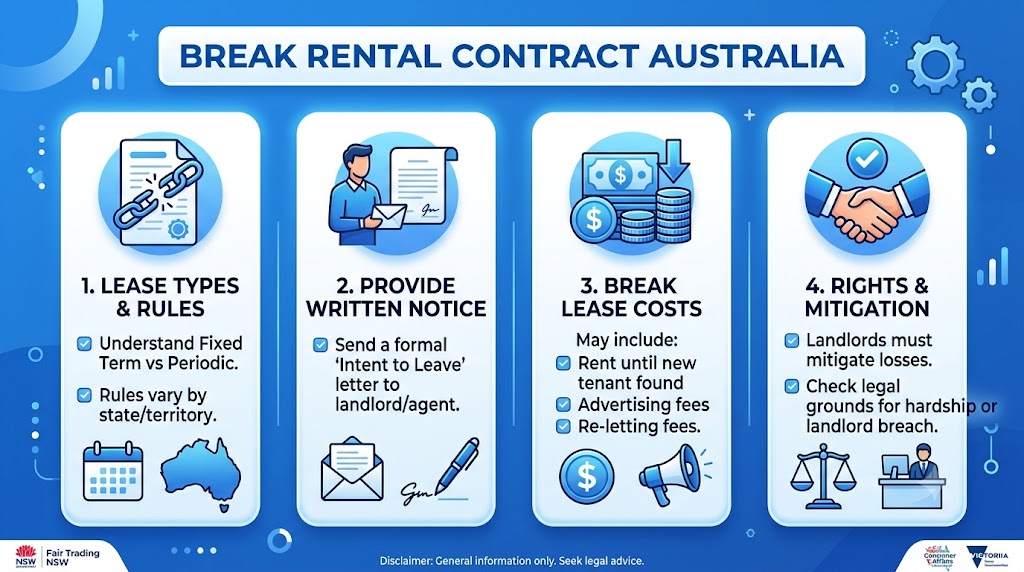
Your rental agreement , the lease , is a contract. You’ve agreed to stay and pay rent for a fixed period, usually six or twelve months, and your landlord’s agreed to let you live there in return. When you leave before that period ends, without a legally solid reason, that’s breaking the lease.
Worth noting: this only applies to fixed-term agreements. If you’re already on a periodic lease (month-to-month, after your fixed term expired), you can usually just give notice and go, no drama(Break Rental Contract Australia).
Will You Get in Legal Trouble(Break Rental Contract Australia)?
Not in the way people sometimes imagine. This is a civil matter, not a criminal one , think unpaid bill, not broken law. Your landlord’s main recourse is financial: they can go after you for costs, not have you arrested(Break Rental Contract Australia).
One thing to keep in mind though , Australia doesn’t have one single set of tenancy rules. Each state and territory runs its own show, so what applies in Sydney might look a bit different in Perth or Hobart. The broad strokes are similar everywhere, but the fine print changes(Break Rental Contract Australia).
Okay, So What Does It Actually Cost You?
Rent until someone else moves in: This is usually the biggest chunk. You’re generally on the hook for rent up until a new tenant takes over , not necessarily all the way to your original end date, just until the property’s re-let.
Advertising and letting fees: The property manager has to advertise the place again, and there’s often a “letting fee” for finding a new tenant , commonly around one to two weeks’ rent.
A lease-break fee: Depending on the state, this might be a flat formula. In NSW, for instance, breaking within the first quarter of your lease could mean paying four weeks’ rent; second quarter, three weeks; and so on, tapering down the closer you get to your natural end date. Victoria works similarly. Queensland’s a bit different , landlords there generally have to show actual, reasonable costs rather than just applying a formula(Break Rental Contract Australia).
Here’s something a lot of tenants don’t realise, though: your landlord can’t just sit back and let the rent bill rack up. They’re legally required to try re-letting the place reasonably quickly , it’s called a “duty to mitigate loss.” If they’re slow-walking it or knocking back perfectly good applicants, you might have grounds to push back on what they’re claiming(Break Rental Contract Australia).
What About Your Bond?
Your bond, usually four weeks’ rent, sits with a state bond authority, not directly with your landlord. If you owe money for break costs, damage, or unpaid rent, they can apply to claim it from your bond. If you believe their claim is unfair or excessive, you can dispute it with the bond authority or with your state’s tenancy tribunal. You don’t just have to accept whatever number they throw at you(Break Rental Contract Australia).
The One Everyone Worries About: Blacklisting
This is usually the real fear behind the question. If you leave still owing money and it doesn’t get sorted, you could end up listed on a tenancy database, which people commonly call being “blacklisted.” And yeah, it can genuinely make finding your next rental harder, since a lot of agents check these lists (Break Rental Contract Australia).
But it’s not a free-for-all for landlords either. They’re supposed to give you notice and a chance to respond before listing you, and any listing has to be accurate and can’t just sit there forever. If you get listed unfairly, you can dispute it , either with whoever runs the database or through your state’s tribunal (NCAT in NSW, VCAT in Victoria, and so on).
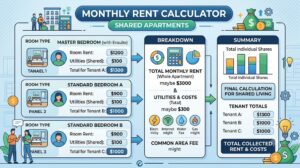
Read More: Monthly Rent Calculator Shared Apartments – Free & Accurate Cost Split Tool
Could It Follow You Financially?
If a debt from breaking your lease goes unpaid long enough, it might get handed to a debt collector, or the landlord could take it to a tribunal for a formal ruling. Whether it hits your credit file depends on how far things escalate(Break Rental Contract Australia) , it’s not automatic the way a missed loan payment is, but it can happen if things drag on unresolved.
When You Might Not Owe Anything At All
Here’s the part that gets missed a lot(Break Rental Contract Australia) , not every early move-out counts as “breaking” the lease in the costly sense. There are situations where you can leave penalty-free:
- Domestic or family violence. Most states now let tenants in this situation end the lease quickly and without financial penalty, usually just by providing something like a protection order as evidence.
- The place becomes unliveable. Fire, flood, structural damage , if it’s genuinely unsafe, that changes things.
- Your landlord breaches the agreement. Ignoring urgent repairs, not respecting your right to reasonable privacy , this can give you legitimate grounds to leave early, sometimes with tribunal approval.
- The property gets sold , in certain circumstances, particularly if vacant possession is required.
- Genuine hardship, in some states, can also be grounds for early termination, though usually a tribunal needs to sign off on it.
If any of this sounds like your situation, don’t just assume you owe break fees. Talk to your state’s tenants’ advice service first , you might not.
If You Do Need to Break the Lease, Here’s How to Do It Smart(Break Rental Contract Australia)
| Tip | Why It Matters |
|---|---|
| Read your lease first | Check your lease agreement for any break clause, notice period, and fees before making a decision. |
| Tell your landlord early (in writing) | Giving written notice as soon as possible allows the landlord to advertise the property sooner, reducing the rent you may still owe. |
| Keep paying rent until your lease ends | Stopping rent payments can increase your debt and weaken your position if the matter goes to a tribunal. |
| Make the property easy to re-let | Keep the property clean and be flexible with inspections so it can be rented out faster. |
| Find a replacement tenant | Ask your landlord if they will accept a lease transfer with a suitable new tenant to reduce your costs. |
| Get every agreement in writing | Confirm any fee reductions, lease transfer approvals, or move-out arrangements by email for future reference. |
| Complete the final inspection carefully | Clean the property, document its condition, and ensure everything is in order to protect your bond. |
| Ask if fees can be reduced | If you’ve been cooperative and provided enough notice, the landlord or property manager may agree to lower some fees. |
Read More: Hidden Costs of Renting Australia Beyond Weekly Rent
If Money’s Genuinely Tight
You’re not stuck figuring this out alone. Every state runs a free tenants’ advice and advocacy service , they can walk you through your rights, help you negotiate, and even represent you at a tribunal hearing if it comes to that. And the tribunals themselves (NCAT, VCAT, QCAT, depending on where you are) are built to be accessible without a lawyer, with low or waived fees for people facing hardship(Break Rental Contract Australia).
Quick State-by-State Notes
- NSW and Victoria lean on set formulas tied to how far into your lease you are.
- Queensland wants landlords to show actual reasonable costs, not just apply a flat fee.
- WA, SA, Tasmania, ACT, and NT each have their own legislation, broadly similar in spirit but different in the details.
Laws shift over time, so it’s always worth double-checking with your state’s tenancy authority or a local tenants’ service before you make any final decisions.
Read More: Common Rental Scams in Australia and How to Avoid Them(Rental Scams Australia)
Conclusion
Breaking a lease in Australia isn’t a disaster , but it’s also not something to wing(Break Rental Contract Australia). The costs are real, the blacklisting risk is real, but so are your protections. Act early, put things in writing, keep paying rent until it’s sorted, and check whether you actually qualify for a penalty-free exit before assuming the worst(Break Rental Contract Australia).
A short conversation with a tenants’ advice service can save you far more than the time it takes to make the call.
FAQ’s
1. Can I legally break a rental contract in Australia?
Yes. You can Break Rental Contract Australia legally, but you may need to pay break lease fees, compensation, or rent until a new tenant is found, depending on your state’s tenancy laws.
2. How much does it cost to break a rental contract in Australia?
The cost to Break Rental Contract Australia varies by state, your lease agreement, and how much time is left on your fixed-term lease. You may also be responsible for advertising or reletting costs.
3. Do I have to give notice before breaking my lease?
Yes. If you plan to Break Rental Contract Australia, you should give written notice as early as possible. Early notice can reduce the amount you may have to pay.
4. Can I avoid paying break lease fees?
In some situations, yes. If your landlord agrees, a replacement tenant is found quickly, or the landlord breaches the lease, your costs may be reduced or waived.
5. What happens if I stop paying rent after moving out?
Stopping rent payments without an agreement can lead to unpaid rent, legal action, and may affect your rental history. Always follow the proper process.
6. Can I transfer my lease to another tenant?
Many landlords allow a lease transfer if a suitable replacement tenant is approved. This can be a good way to reduce costs when ending your lease early.
7. Will breaking my lease affect my rental history?
Not usually, if you follow the correct legal process, pay any required fees, and leave the property in good condition.
8. Can my landlord refuse my request to end the lease early?
A landlord may refuse to end the lease without the required conditions being met, but they must still follow the tenancy laws in your state or territory.
9. How can I reduce the cost of breaking my rental contract?
Give early written notice, keep paying rent until the lease ends or a new tenant moves in, maintain the property, and ask if the landlord can reduce the fees.
10. Do tenancy rules differ across Australian states?
Yes. The rules to Break Rental Contract Australia differ between states and territories, so always check the tenancy laws that apply where your rental property is located.