Almost every Australian renter has faced this: you move into a share house with a friend or someone you met online. The first few weeks are great—everyone is polite, clean, and cooperative.
Then, small issues start to crop up. The power bill is unexpectedly high, a partner starts staying over constantly, or shared groceries keep disappearing. Nobody fights, but silent resentment builds up simply because these small problems are never discussed.
This rarely happens because people are bad roommates; it happens because nothing was written down on day one. Relying on unspoken assumptions seldom works out well.
That is exactly why setting clear roommate agreements matters. Creating well-structured roommate agreements isn’t meant to make things awkward or overly formal. Instead, solid roommate agreements simply lay out the basic rules upfront before small issues ruin a great living situation. Having effective roommate agreements keeps everyone on the same page from day one.
Visit Now: https://rentcalcpro.com/
Okay, But What Actually Is a Roommate Agreement?
Let’s clear something up first, because people mix this up constantly. Your lease, the one you signed with the landlord or the agent, is a legal document about the property. It says how much rent is owed, how long you’re locked in, what the bond is, all of that. It has nothing to do with how you and your housemates actually divide things up between yourselves (roommate agreements).
A roommate agreement is a completely separate thing. It’s between you and the people you live with, not you and the landlord. It’s the “how this house actually runs” document, and honestly, most of them aren’t fancy at all. Some people write theirs on a single page of A4 and stick it on the fridge. Others do a shared Google Doc. I’ve even seen one written out as a group text thread where everyone just replied “agreed,” and that worked fine, because it did what it needed to do: it made everyone’s expectations visible (roommate agreements).
You genuinely don’t need a lawyer for this. You need honesty, a bit of forward thinking, and maybe twenty minutes together before moving day.
Why This Actually Matters (Even If You Get Along Fine Right Now)
I think the biggest myth about roommate agreements is that they’re only necessary if you don’t trust the person you’re moving in with. Like it’s some kind of insurance policy against a stranger (roommate agreements).
But that’s not really where most conflict comes from. Most roommate fights don’t happen because someone’s a bad person. They happen because two decent, reasonable people had two completely different ideas about how something was supposed to work, and neither one realised it until it was already a problem (roommate agreements).
Here’s a simple example. Say you and your roommate agree to “split bills evenly.” Sounds clear enough, right? Except, does that mean literally 50/50 every time, no matter who’s actually using more power because they work from home five days a week? Or does it mean adjusting based on usage? You’d be amazed how many people never actually clarify this until the first bill lands and someone quietly feels ripped off (roommate agreements).
Or think about guests. One person might think having a partner stay over three nights a week is completely normal. The other might start feeling like they’re now living with three people instead of two, and paying rent for a room that’s suddenly got extra foot traffic in it. Neither person is wrong here , they just never talked about where the line actually is (roommate agreements).
Unspoken Assumptions vs. Clear Roommate Agreements
| Area of Conflict | What People Assume (Unspoken) | What Roommate Agreements Clarify |
| Splitting Utility Bills | “We’ll just split 50/50” (even if one works from home 5 days a week). | Establishes whether bills are split strictly 50/50 or adjusted for usage/work-from-home setups. |
| Overnight Guests | “Having a partner over 3 nights a week is totally normal.” | Defines clear limits on guest stays before someone is considered an extra full-time housemate. |
| Unequal Room Sizes | “We’ll split the total rent equally regardless of room size.” | Uses a shared rent calculator to set fair rent shares based on room size, en-suites, and sunlight. |
| Handling Differences | “We trust each other, so we don’t need to discuss boundaries now.” | Forces important conversations early while everyone is friendly, avoiding quiet resentment. |
A roommate agreement forces that conversation to happen early. While everyone’s still friendly. While nobody’s annoyed yet. That timing matters more than people realise, because negotiating boundaries when you like each other is a completely different experience than negotiating them after weeks of quiet resentment.
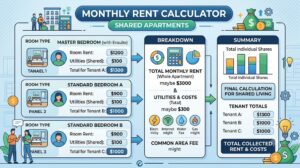
There’s also just the plain financial reality of share housing. Rent is usually the single biggest expense any of you have, and when it’s unclear who owes what, or by when, small delays turn into real tension fast. If your rooms aren’t identical- different sizes, one with an en suite and one that gets better light , using something like a shared rent calculator to work out a fair split takes the guesswork (and the awkward negotiating) out of it completely.
Read More: Moving Costs Budget: How to Budget for Moving Costs on Top of Rent
What Should Actually Go Into the Roommate Agreements?
Alright, let’s get into the practical part, the stuff that should genuinely be in there.
Rent, and How You’re Actually Splitting It
This is the one people assume is obvious and then completely fumble. “We’ll split it evenly” is not a plan. It’s the beginning of a plan.
Get specific:
- What’s the total rent, and what’s each person’s exact share?
- Is it a flat split, or adjusted for room size, private bathrooms, better natural light, whatever?
- What day is each person’s share actually due?
- How’s it being paid , bank transfer, a shared account, a splitting app like Splitwise?
- What happens if someone’s short or late , is there a grace period, or does it need to be covered immediately?
If your rooms genuinely aren’t equal, don’t force an even three-way split just to avoid an awkward conversation. That “fairness” ends up being unfair to whoever got the tiny room with no window, and they will notice, even if they don’t say anything for the first few months (Roommate Agreements).
Bond, and Who Actually Put In What
If everyone chipped in for the bond together, write down exactly who paid what. I cannot stress this enough , this is one of those things that feels unnecessary to record until the lease ends, someone’s already moved three suburbs away, and suddenly nobody can agree on who’s owed what from the refund.
A single line in a shared doc- names, amounts, dates- saves you from a genuinely painful conversation months down the track with someone you may not even be in regular contact with anymore (roommate agreements).
Bills, Electricity, Gas, Water, Internet, the Lot
This is where a lot of share houses quietly fall apart, honestly. Decide early:
- Even split, or based on usage?
- Who’s actually setting up the accounts and paying the providers on time (this matters more than it sounds , someone’s credit gets dinged if bills go unpaid)?
- How does reimbursement work if one person fronts a cost?
- What about the unplanned stuff, a plumber, an electrician, a broken appliance?
Households that skip this step tend to have the exact same argument every three months when the bill arrives: “why is this so high, and why am I paying the same as someone who’s basically never home?”
Chores and the Never-Ending Question of Whose Turn It Is (Roommate Agreements)
Nobody wants a laminated chore wheel taped to the fridge like it’s a share house from a sitcom. But some baseline understanding really does help, even if it’s loose (roommate agreements).
- How’s cleaning divided, rotated weekly, split by area, or just “everyone cleans up after themselves and the kitchen gets a proper clean once a week”?
- Who buys the shared basics, toilet paper, dish soap, and bin liners, and how do you avoid the situation where three people each think the other two are handling it?
- What does “clean” even mean to each of you? Genuinely, people’s standards vary way more than you’d expect, and this alone causes more low-grade friction than almost anything else on this list.
You don’t need rules for everything. But some agreement (roommate agreements), even something as simple as “the bathroom gets a proper clean every Sunday, whoever’s turn it is” , beats total silence, because silence usually just means one person quietly does more and more until they’re fed up and nobody even knows why.
Guests and Overnight Stays
This one feels unnecessary to bring up until suddenly it really isn’t.
- How many nights can a guest stay before it starts affecting rent or bills?
- Is a heads-up expected before someone has people over, especially overnight?
- How do guests affect shared spaces, the kitchen, living room, bathroom queues in the morning?
- At what point does a “guest” who’s basically always there need to be formally added to the lease and the agreement?
Nobody wants to feel like they’re policing their roommate’s relationship or social life. But having a shared, agreed-upon boundary here stops that slow build of resentment that happens when one person feels like they’re quietly subsidising someone else’s partner living rent-free.
Shared Spaces and Just… Basic Respect
Kitchens, living rooms, bathrooms- these get used by everyone, so friction is basically guaranteed without a little bit of structure.
- Is food shared, or does everyone keep their own groceries separate?
- What are the noise expectations, especially for people working from home or studying?
- Rules (loose ones are fine) around shared furniture and appliances
- Basic stuff like knocking before entering someone’s room, or not going through someone’s things
You don’t need a constitution for the fridge. But something as small as “label anything that’s not for sharing” saves everyone from that deeply annoying “wait, did you eat my leftovers?” conversation.
Read More: What Happens If You Break a Rental Contract in Australia (Break Rental Contract Australia)
Notice Period for Moving Out
People’s lives change. Jobs move, relationships end, relationships start, someone decides they want to live alone for once. Your agreement should state how much notice is expected before someone moves out , usually somewhere between two and eight weeks, depending on your lease and how realistic it is to find a replacement quickly.
This protects whoever’s staying from suddenly being short on rent with no warning, and it gives the whole household enough runway to find someone new without a last-minute scramble.
Finding (and Approving) a New Roommate
If someone leaves mid-lease, who’s actually responsible for finding the replacement? And , maybe more importantly , do the remaining roommates get any say before a new person moves in? This one gets overlooked constantly, and it matters, because nobody wants to come home one day to a total stranger who was approved without them having any input at all(Roommate Agreements).
Sorting Out Disagreements
Even roommates who genuinely like each other will disagree eventually. You don’t need a formal mediation process, but agreeing on the basics helps:
- Raise things early and directly, rather than letting them build up into something bigger
- Have some kind of casual check-in now and then , even just “how’s everyone finding things?” over dinner once a month
- Agree that bigger issues get discussed as a group, not through passive-aggressive sticky notes on the fridge (we’ve all seen this go badly)
What Happens If Someone Can’t Pay Rent?
Nobody likes thinking about this in advance, but it’s exactly the kind of thing you want settled before it’s an actual emergency, not during one. If someone’s short on their share, is there a short grace period? Do the others cover it temporarily and get paid back? Having this figured out ahead of time takes a lot of the emotion out of what can otherwise turn into a genuinely stressful situation, fast.
Does It Actually Need to Be Written Down?
Talking it through verbally is a start, sure, but memories drift, and people remember conversations differently over time , not out of dishonesty, just because that’s how memory works. Writing it down isn’t about preparing for a fight. It’s about having something to point back to when someone’s genuinely unsure what was agreed.(Roommate Agreements)
It doesn’t need legal wording or a fancy template. A shared document listing rent, bills, chores, and a few house rules , agreed to by everyone, even just in a group chat , is enough for most share houses. The important part is that it exists somewhere everyone can actually see it, rather than living only in someone’s memory of a chat from move-in day three months ago.
When You Should Revisit It
A roommate agreement isn’t set in stone the day you write it. Households change. Someone starts working from home more. A new person moves in. Rent goes up at renewal time. It’s worth going back over the agreement:
- Whenever someone new joins the household
- After a rent increase or lease renewal
- If the same issue keeps popping up no matter what the current agreement says
- Every six months or so, just as a general check-in
Treat it as something you revisit occasionally, not a document you write once and forget exists.
Making the Money Part Easier
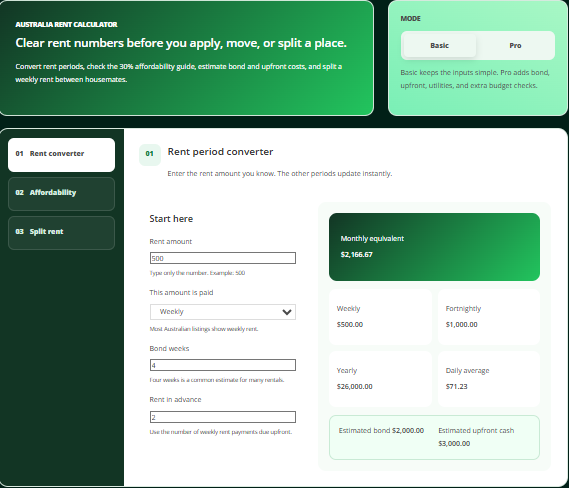
The personal side of a roommate agreement- chores, guests, boundaries- mostly comes down to honest conversation and a willingness to compromise. But the financial side doesn’t have to involve any guesswork at all. A shared rent calculator can help you work out a genuinely fair split based on room size or usage, so nobody’s left wondering if they’re quietly paying more than they should be simply because nobody did the maths properly. Getting the numbers right early removes one of the most common reasons share houses turn sour in the first place.
Read More: Hidden Costs of Renting Australia Beyond Weekly Rent
Conclusion
A roommate agreement isn’t about assuming the worst in the people you’re about to live with. If anything, it’s the opposite; it’s how you protect a genuinely good living situation before small, unspoken misunderstandings get the chance to snowball into something bigger. The conversation might feel a little stiff or overly formal at first, especially if you’re moving in with people you already like. But it almost always pays off (roommate agreements).
Six months from now, when nobody’s silently fuming over the power bill, and nobody’s wondering out loud who’s supposed to buy the next bottle of dish soap, you’ll be glad you had it. Set aside an hour before move-in day. Talk through rent, bills, chores, and guests. Write down what you land on. It’s a small thing, but it makes shared living genuinely easier for everyone in the house (roommate agreements).
FAQ’s
1. What are roommate agreements and why are they necessary?
Roommate agreements are written contracts designed to outline household rules and financial responsibilities for shared living spaces. While leases cover landlord terms, roommate agreements focus specifically on internal household dynamics to prevent future disputes. Having well-structured roommate agreements ensures that every tenant understands their duties regarding rent, shared chores, and house policies from day one.
2. Is a roommate agreement legally binding?
While formal lease contracts bind tenants to landlords, roommate agreements can be legally enforceable regarding financial obligations in small claims court. For instance, signed roommate agreements can hold defaulting housemates accountable for unpaid utility bills or rent shares. However, personal clauses within roommate agreements—such as chore schedules or quiet hours—are considered social agreements rather than legally enforceable matters.
3. What key details should be included in comprehensive roommate agreements?
Comprehensive roommate agreements must clearly detail how rent and shared utility expenses will be divided among all tenants. Additionally, effective roommate agreements should explicitly outline household chore schedules, guest policies, and noise restrictions. By addressing these daily details early on, solid roommate agreements protect everyone from misunderstandings over shared living expectations.
4. How do roommate agreements differ from traditional lease agreements?
A lease agreement is a legal contract strictly between a property manager and tenants, whereas roommate agreements exist solely between the individuals sharing the home. Unlike leases, customizable roommate agreements focus on daily co-living arrangements like utility splits and cleaning rotations. While a lease holds everyone jointly responsible for total rent, clear roommate agreements break down individual financial duties among housemates.
5. Can roommate agreements help resolve financial disputes among housemates?
Yes, well-documented roommate agreements provide a clear reference point when resolving financial disagreements over bills or rent. Having signed roommate agreements eliminates guesswork regarding who owes what for utilities, internet, or groceries. If a tenant refuses to pay their agreed-upon share, properly structured roommate agreements serve as vital evidence when pursuing reimbursement.
6. When is the best time to draft and sign roommate agreements?
The absolute best time to establish roommate agreements is before moving in together or during the very first week of tenancy. Creating roommate agreements while everyone is on friendly terms allows for open, calm negotiations regarding house rules. Setting up proactive roommate agreements early prevents awkward discussions later when quiet resentment or minor conflicts have already built up.
7. How do roommate agreements handle overnight guests and long-term visitors?
Overnight guest policies are one of the most critical sections included in modern roommate agreements. Clear roommate agreements define how many consecutive nights a guest can stay before contributing to household expenses. By establishing these boundaries early, roommate agreements prevent situation where a partner effectively moves in without paying rent or utilities.
8. Can roommate agreements be updated or modified during the lease period?
Yes, active roommate agreements can easily be modified whenever household circumstances or financial arrangements change. All co-tenants must agree to the new terms before updating their existing roommate agreements. Once adjustments are made, all housemates should re-sign the updated roommate agreements to ensure everyone remains aligned on the new rules.
9. How do roommate agreements address unequal bedroom sizes or amenities?
When bedrooms differ in size or features, roommate agreements help establish a fair, tiered rent split based on room quality. Using tools like rent calculators alongside roommate agreements allows tenants to assign higher rent shares to larger rooms or en-suite bathrooms. This transparent process in roommate agreements ensures nobody feels cheated by paying an equal share for a smaller room.
10. What happens if a housemate moves out early under signed roommate agreements?
Properly drafted roommate agreements include early termination clauses specifying required notice periods, such as 30 or 60 days. Under these roommate agreements, departing roommates are responsible for finding a suitable replacement or covering their rent share until a replacement is found. Enforcing these rules through clear roommate agreements protects remaining tenants from sudden financial strain.